Skip to content

Effective Fleet Vehicle Maintenance Tips: Preventive Maintenance Strategies That Significantly Extend the Lifespan of Your Equipment
Preventive maintenance uses scheduled and condition-based interventions to preserve fleet efficiency and extend service life. Structured programs reduce unexpected failures and repair costs. This article outlines essential services, scheduling best practices, diagnostics, and fluid management, and shows how providers like Truck City Service can support fleet objectives.
What Are the Essential Preventive Maintenance Services for Commercial Trucks?
Preventive maintenance builds baseline reliability through inspections, lubrication, and component replacement. Regular system checks and targeted fluid exchanges detect wear early and prevent major mechanical failures.
Which Scheduled Maintenance Tasks Protect Medium- and Heavy-Duty Trucks?
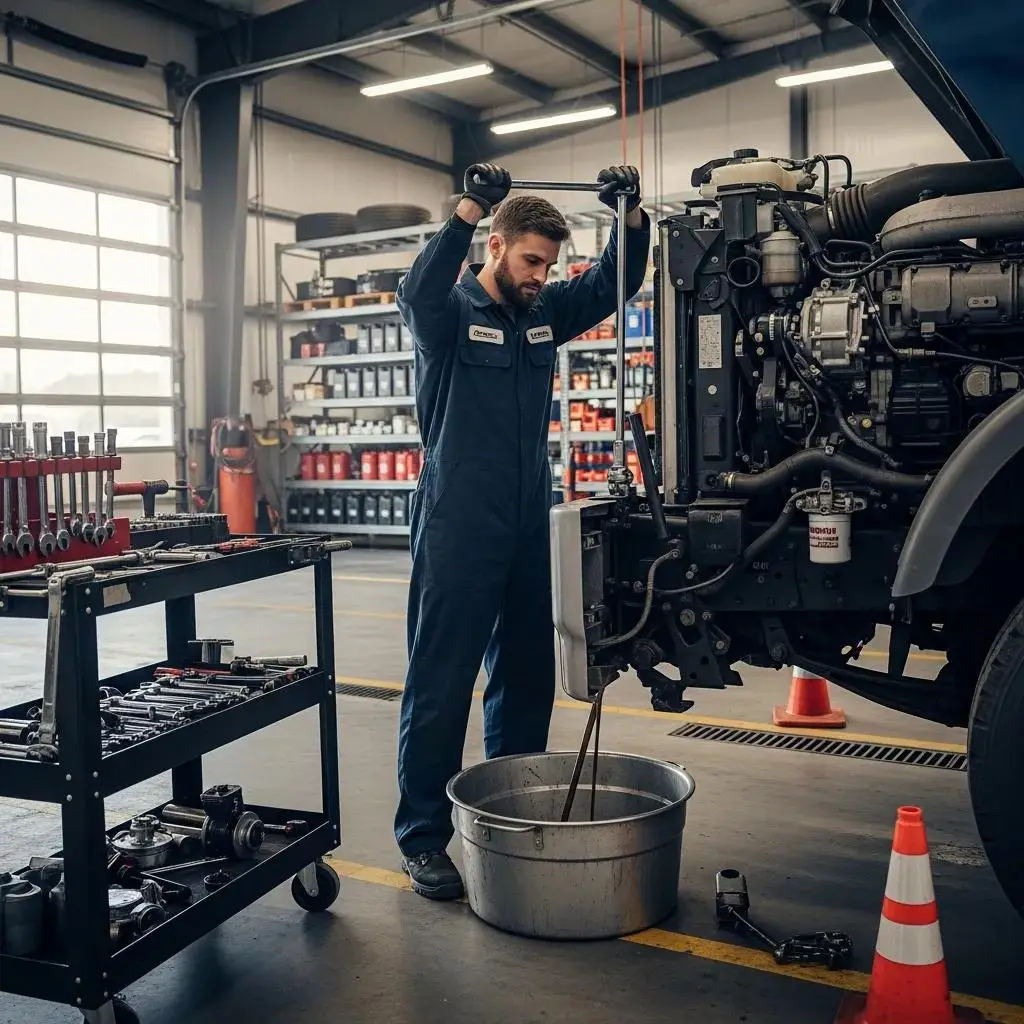
Scheduled maintenance tasks for medium- and heavy-duty trucks include:
- Oil Changes: Regular oil changes help maintain engine health by ensuring proper lubrication and reducing wear.
- Brake Servicing: Routine brake inspections and servicing prevent brake failure and enhance safety.
- Tire Rotations: Rotating tires at recommended intervals promotes even wear and extends tire life.
Consistent execution supports reliability and compliance.
How Do Diagnostics and Fluid Changes Prevent Costly Breakdowns?
Diagnostics and timely fluid changes catch faults early, preserving engine, transmission, and electrical systems and preventing major repairs and unplanned downtime.
Advanced solutions now combine telematics and algorithmic analysis to predict maintenance needs from real-time telemetry and operational trends.
Predictive Maintenance for Proactive Fleet Management
Conventional maintenance plans that rely solely on fixed intervals can produce premature part replacements or unexpected failures. This document describes a Connected Aftermarket Services Platform (CASP) that employs real-time data analytics, predictive maintenance methodologies, and integrated e-commerce functions to transition off-highway vehicle fleet management toward a proactive model. The proposed architecture combines IoT-enabled telematics, cloud-based oversight, and AI-driven diagnostics to collect and evaluate machine health indicators such as engine load, vibration, oil pressure, and utilization patterns. Predictive maintenance models leverage historical and live data to generate advance notifications for component degradation and required service actions.
Connected Aftermarket Services for Off-Highway Vehicles: Enhancing Fleet Management Through Real-Time Data and Predictive Maintenance, 2025
How to Create an Effective Equipment Maintenance Schedule for Your Fleet?
Create schedules by assessing duty cycles and manufacturer intervals, grouping assets by usage, and setting inspection frequencies accordingly. Use maintenance software to centralize records, plan work orders, and track tasks.
What Are Recommended Maintenance Intervals for Commercial Fleet Vehicles?
Typical intervals include:
- Oil Changes: Every 7,500 to 10,000 miles, depending on the vehicle, oil type, and operating conditions.
- Brake Inspections: Every 10,000 miles or as needed based on performance.
- Tire Rotations: Every 6,000 to 8,000 miles to ensure even wear.
Follow manufacturer guidance and operational data to set intervals.
How Can Scheduled Truck Inspections Extend Equipment Lifespan?
Scheduled inspections extend equipment lifespan by enabling technicians to evaluate critical systems, document wear trends, and implement corrective maintenance before failures occur. Early remediation of brake, tire, or engine issues prevents compounding damage and limits repair costs. Routine inspections also verify compliance with safety regulations and protect fleet asset value.
What Are the Cost and Downtime Benefits of Preventive Maintenance?

Preventive maintenance delivers measurable reductions in repair expenditures and unscheduled downtime by controlling failure risk and improving asset predictability. Planned maintenance allows operations to schedule service during low-impact windows and reduces the operational disruption associated with emergency repairs.
How Does Preventive Maintenance Reduce Fleet Operating Costs?
Preventive maintenance lowers operating costs by decreasing repair frequency and severity across the fleet. Studies indicate that fleets implementing regular maintenance can reduce repair expenses by approximately 12% to 35%, depending on maintenance scope and execution. Additionally, vehicles maintained to specification generally demonstrate improved fuel efficiency, which further reduces operational expenditure.
Remote monitoring and onboard diagnostics further increase efficiency by enabling condition-based interventions and accelerating service response times.
Enhancing Fleet Efficiency with Remote Diagnostics & Monitoring
Fleet managers continually pursue measures to increase operational efficiency and contain costs. Key objectives include minimizing downtime, improving fuel consumption, lowering maintenance expenditures, and preserving vehicle residual value. Remote electronic monitoring enables maintenance practices that align with actual operating conditions, while integrated remote diagnostics permit faster and more reliable servicing.
Mobile assets monitoring for fleet maintenance, 2005
What Impact Does Maintenance Have on Fleet Uptime and Productivity?
Consistent maintenance improves fleet uptime by reducing unplanned outages and increasing vehicle availability for scheduled operations. Higher asset availability supports on-time service delivery and enhances customer reliability metrics, thereby sustaining operational throughput and reputation.
Integrating predictive analytics and advanced telemetry can further decrease downtime by enabling earlier, more targeted maintenance interventions.
Optimizing Fleet Efficiency & Reducing Downtime with Predictive Analytics
Effective fleet management requires tools and strategies that increase operational efficiency, reduce vehicle downtime, and improve incident response. This paper examines monitoring systems, predictive analytics, automation, and real-time visualization techniques that optimize autonomous vehicle fleet operations. Case studies from industry participants such as Waymo, Zoox, Tesla, and Uber ATG illustrate best practices and practical outcomes.
Optimizing Fleet Management for Autonomous Vehicles: Strategies and Tools to Enhance Efficiency, Reduce Downtime, and Improve Response Time to Incidents, 2025
Why Choose Truck City Service for Your Heavy-Duty Vehicle Upkeep Strategies?
Selecting Truck City Service ensures that heavy-duty assets receive service aligned with manufacturer standards and fleet operational requirements. The provider emphasizes preventive maintenance, comprehensive diagnostics, and scheduled repairs to maximize vehicle availability and lifecycle value.
What Preventive Maintenance Services Does Truck City Service Offer?
Truck City Service offers a range of preventive maintenance services, including:
- Comprehensive Inspections: Thorough assessments of vehicle systems to identify potential issues.
- Fluid Changes: Timely replacement of essential fluids to maintain optimal performance.
- Brake and Tire Services: Expert servicing to ensure safety and reliability.
The combined service set supports consistent fleet operation and reduces the likelihood of unplanned repairs.
How Does Easy Online Scheduling Enhance Fleet Maintenance Efficiency?
Truck City Service provides online scheduling to streamline appointment booking and reduce administrative friction. The system minimizes vehicle downtime by enabling fleet managers to plan service windows proactively and coordinate maintenance with operational requirements. Utilizing online scheduling improves visibility into upcoming work and simplifies resource planning.
Frequently Asked Questions
What are the benefits of using predictive maintenance in fleet management?
Predictive maintenance applies real-time telemetry and analytics to forecast component degradation and required service. This method reduces unexpected failures, lowers repair costs, and improves fleet efficiency by replacing time-based intervals with condition-informed actions. Predictive strategies increase uptime and can extend asset life through timely interventions, yielding measurable cost savings over time.
How can fleet managers ensure compliance with safety regulations through maintenance?
Fleet managers ensure regulatory compliance by implementing a documented maintenance program that mandates regular inspections, records all service activity, and retains audit-ready documentation. Monitoring regulatory updates and providing periodic compliance training for technicians further guarantees that safety requirements are consistently met across the fleet.
What role does technology play in modern fleet maintenance?
Technology enables real-time monitoring, remote diagnostics, and data-driven maintenance planning. Telematics systems supply performance metrics used to prioritize work, while mobile platforms facilitate scheduling and service tracking. AI and machine learning enhance predictive capabilities by detecting failure patterns and informing optimized maintenance actions.
How can fleet managers train their staff on effective maintenance practices?
Managers should implement structured training that combines classroom instruction, hands-on workshops, and professional certification programs. Providing technical manuals, online courses, and refreshers on emerging technologies ensures skill retention. Regularly scheduled training sessions focused on safety protocols and best practices foster a consistent, proactive maintenance culture.
What are the signs that a fleet vehicle needs immediate maintenance?
Indicators requiring immediate attention include abnormal noises, illuminated warning indicators, degraded performance, and observable fluid leaks. Difficulty starting, rough idling, or excessive wear on tires or brakes also warrant prompt inspection. Drivers should report anomalies immediately to enable early intervention and prevent further damage.
How can fleet managers optimize their maintenance schedules?
Optimizing maintenance schedules requires maintenance management software, analysis of vehicle usage patterns, and adherence to manufacturer recommendations. Combining time-based intervals with condition-based triggers ensures services occur when necessary rather than by arbitrary schedule. Regularly review performance data and adjust intervals to align maintenance with actual operating conditions.
Conclusion
Adopting structured preventive maintenance is essential to extending fleet vehicle service life while reducing unplanned downtime and repair costs. Prioritizing inspections, scheduled fluid management, and advanced diagnostics improves operational efficiency and preserves asset value. Engaging a qualified provider such as Truck City Service helps implement these practices consistently and supports long-term productivity improvements.