 Skip to content

Avoid These Common Fleet Maintenance Errors: A Guide for Efficient Operations
Effective fleet maintenance extends vehicle service life and supports reliable operations. Many managers face repeat maintenance issues that raise costs and reduce productivity. This guide highlights five common errors and gives practical steps to improve preventive maintenance, scheduling, and the selection of local providers to reduce downtime and control expenses.
Comprehensive fleet management strategies drive measurable improvements in operational efficiency and productivity, spanning route planning, fuel monitoring, and maintenance scheduling.
Effective Fleet Management for Efficiency & Productivity
The study found that implementing integrated fleet management—route planning, fuel-consumption monitoring, and maintenance scheduling—reduces fuel use.
Crew productivity improved through structured assignments, ongoing training, and fleet monitoring technology, which enhanced safety and delivery performance.
Enhancing School Bus Engine Performance: Predictive Maintenance and Analytics for Sustainable Fleet Operations., S Syed, 2024
What Are the Top 5 Common Fleet Maintenance Mistakes to Avoid?
Identifying frequent maintenance errors is essential to control costs and maximize vehicle availability. Below are five principal mistakes fleet managers should avoid:
- Neglecting Preventive Maintenance
: Skipping routine checks often leads to larger failures and longer downtime.
- Ignoring Diagnostic Checks
: Omitting diagnostics can hide warning signs and delay needed repairs.
- Inadequate Scheduling
: Poor planning increases the chance of unexpected breakdowns.
- Using Unqualified Technicians
: Inexperienced staff may produce substandard repairs and repeat work.
- Not Keeping Accurate Records
: Missing service records hinder planning and trend analysis.
How Does Neglecting Preventive Maintenance Impact Fleet Performance?
Neglecting preventive work raises downtime and repair costs. Small faults can quickly escalate into major failures that remove vehicles from service. Regular inspections and scheduled interventions are usually far cheaper than emergency repairs and rushed parts procurement.
What Are Frequent Diagnostic Oversights in Commercial Truck Repairs?
Common oversights include ignoring dashboard alerts, abnormal noises, or small fault codes. Delayed diagnostics let problems worsen; prompt diagnostic checks preserve safety and keep vehicles available for work.
Which Preventive Maintenance Best Practices Ensure Fleet Reliability?
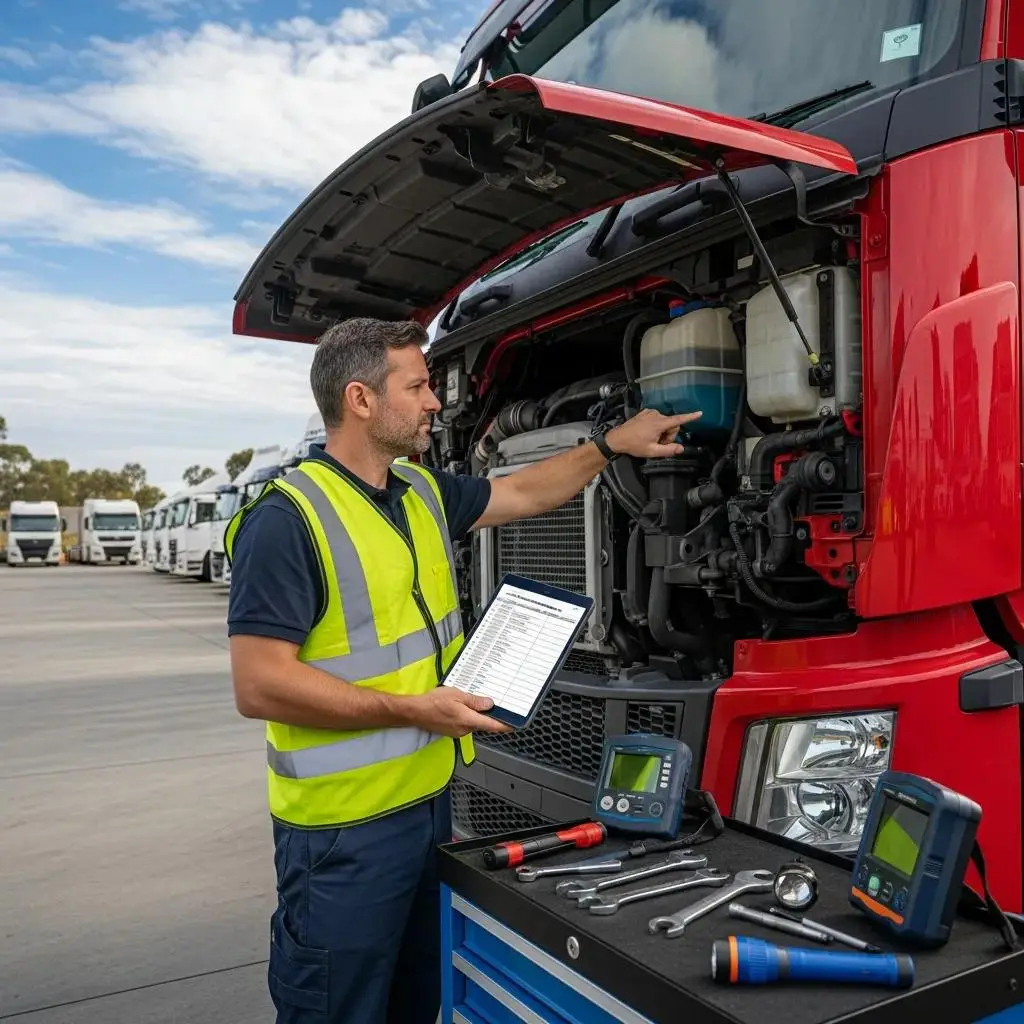
Standardized preventive protocols detect issues early and keep vehicles serviceable. Combine clear procedures with consistent documentation to maintain predictable performance.
- Scheduled Maintenance
: Set recurring intervals based on use and OEM guidance to prevent surprises.
- Use of Checklists
: Checklists ensure inspections and corrective actions are not overlooked.
How to Implement Scheduled Maintenance to Reduce Downtime?
Base intervals on vehicle utilization and manufacturer specs, and keep concise service records to support planning. A disciplined schedule lowers unplanned downtime and improves fleet productivity.
Additional research demonstrates that advanced and predictive maintenance scheduling yields measurable operational savings and increases vehicle availability.
Predictive Maintenance for Fleet Scheduling & Savings
The pilot study applying maintenance scheduling best practices reported more than 90% average truck travel-time savings when forecasting clogged versus non-clogged filters.
The Role of Fleet Management in Improving Fuel Efficiency, Crew Productivity, and
Shipping Company Revenues, DA Nugroho, 2025
What Are Effective Fleet Maintenance Checklists for Medium and Heavy-Duty Trucks?
Well-designed checklists ensure repeatable inspections and clear records. Include critical systems and document completed tasks for easier audits and planning.
- Daily Checks
: Quick checks of fluids, tire pressure, lights, brakes, and safety gear keep vehicles roadworthy.
- Weekly Inspections
: Inspect brakes, suspension, belts, and hoses to catch wear early.
How Can Fleet Maintenance Scheduling Strategies Optimize Operations?
Thoughtful scheduling reduces total cost of ownership by preventing failures and maximizing availability. Timely maintenance supports revenue-generating operations.
- Online Scheduling Benefits
: An online system improves booking efficiency and cuts administrative work.
- Frequency of Service
: Match service frequency to usage patterns and manufacturer recommendations to keep performance steady.
What Are the Benefits of Using an Online Scheduling System for Fleet Services?

Online scheduling increases booking throughput and reduces administrative overhead. It helps managers track appointments, set reminders, and confirm every vehicle receives scheduled attention.
How Often Should Commercial Trucks Be Serviced to Prevent Common Errors?
Align service intervals with vehicle class and operating intensity. Typical guidance is 5,000–7,500 miles for medium-duty trucks and 10,000–15,000 miles for heavy-duty vehicles, adjusted for actual conditions. Following recommended intervals preserves performance and lowers the chance of costly corrective work.
Why Choose Local Fleet Maintenance Services in Greeley, CO for Your Commercial Trucks?
Local providers offer faster response and familiarity with regional conditions and regulations. That responsiveness reduces transit time for repairs and helps maintain uptime.
- Local Expertise
: Local shops understand area operating conditions and common local failure modes.
- Cost Reduction
: Local service can lower transport costs and speed turnaround on repairs.
What Advantages Does Truck City Service Offer for Preventive Maintenance?
Truck City Service provides preventive maintenance, diagnostics, and repairs for medium- and heavy-duty trucks, big rigs, and RVs, adapting work to fleet needs and technical requirements.
How Does Local Expertise Reduce Fleet Repair Costs and Downtime?
Local knowledge enables faster response and targeted corrective actions, improving reliability and lowering operating expenses through reduced downtime.
To streamline workflows and reduce administrative friction, consider the advantages of
scheduling service online
with a certified local provider.
Frequently Asked Questions
What are the signs that a fleet vehicle needs immediate maintenance?
Look for abnormal noises, dashboard warnings, sudden performance loss, or fluid leaks. Driver reports of handling issues or start failures also require prompt attention to avoid escalation.
How can technology improve fleet maintenance efficiency?
Telematics and fleet platforms provide real-time diagnostics, automate scheduling, and store service histories. Predictive analytics helps prioritize maintenance before failures occur.
What role does driver training play in fleet maintenance?
Trained drivers spot issues early and perform consistent routine checks, reporting defects quickly. Better driving practices also reduce wear and improve asset life.
How can fleet managers ensure compliance with maintenance regulations?
Monitor applicable federal and local standards, embed them in procedures, keep accurate records, and run periodic audits. Compliance software centralizes documentation and lowers regulatory risk.
What are the cost implications of poor fleet maintenance?
Poor maintenance increases repair costs, fuel use, and regulatory exposure, while causing downtime and accelerated depreciation that harm fleet finances and readiness.
How can fleet managers effectively track maintenance history?
Use fleet management software to log service dates, repair types, and costs. Standardize checklists for consistent data capture and analyze records to spot patterns and optimize schedules.
Conclusion
Avoiding common maintenance errors improves vehicle reliability and operational efficiency. Combine preventive maintenance, disciplined scheduling, and local expertise to reduce downtime and control repair expenditures. Evaluate available maintenance solutions to advance fleet performance and achieve measurable gains.